

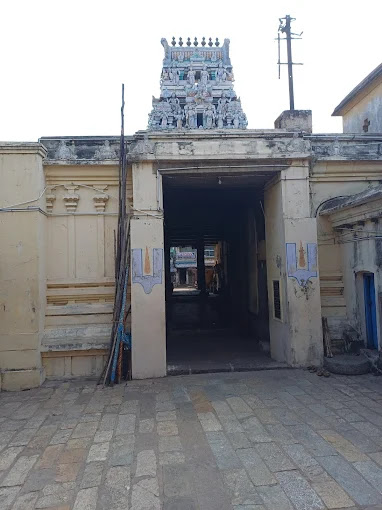
Location
- Address:
Devaraja Mudali Street, Rattan Bazaar, George Town, Chennai, Tamil Nadu
- The temple stands in Peddanaickenpettah,
George Town, and is closely linked to the colonial-era development of
Madras city.
Main Deities
- Presiding Deity:
Chenna Kesava Perumal (a form of Lord Vishnu)
- Consort:
Chenkamala Valli Thayar (Goddess Lakshmi)
Subshrines &
Associated Temples
- The temple complex houses shrines for
Vishnu’s consort and other deities.
- It is traditionally paired with the Chenna
Malleeswarar Temple (dedicated to Lord Shiva), making them twin
temples that represent Vaishnavism and Shaivism together.
- Other subshrines include sanctums for
Alwars (Vaishnava saints) and minor deities, reflecting the inclusive
Dravidian temple style.
Temple Significance
- Patron Deity of Chennai:
The temple is believed to have given the city its name. “Chenna” or
“Chenni” means face in Tamil, and the temple was regarded as the face
of the city.
- Historical Importance:
It was the first temple built in the new settlement of Madras by
the British East India Company, symbolizing resilience and devotion during
colonial times.
- Cultural Role:
The temple is a hub of Vaishnavite worship and festivals, embodying
Chennai’s spiritual heritage and architectural beauty.
- Architectural Style:
Built in Dravidian architecture, with gopurams (tower gateways) and
mandapams (halls) that reflect South Indian temple traditions.
History
- Origins:
The temple was constructed around 1646 CE, soon after the founding
of Madras by the British East India Company.
- Founder:
Built by Beri Thimmappa, a dubash (interpreter and broker) who
mediated between the East India Company and the local Nayaks.
- Twin Temples:
Alongside the Chenna Malleeswarar Temple (dedicated to Shiva), it
formed the spiritual nucleus of the new settlement.
- Colonial Context:
The original temple near Fort St. George was demolished by the British for
security reasons, but Thimmappa rebuilt it in Peddanaickenpettah
(present-day George Town).
Legends
- Name & City Connection:
The word “Chenna” is believed to mean “face” in Tamil, and
the temple was regarded as the face of the city. Hence, Chennai
(formerly Madras) is thought to derive its name from this temple.
- Guardian Role:
Local tradition holds that the temple was built to protect the settlement
spiritually, making it the patron temple of Madras.
- Vaishnava-Shaiva Harmony:
The twin temples (Kesava for Vishnu, Malleeswarar for Shiva) symbolize
religious inclusivity, showing how both traditions were honored at the
city’s inception.
Architecture
- Style:
Built in Dravidian architecture, typical of South Indian temples.
- Features:
- Raja Gopuram (Main Tower):
Ornate gateway tower with sculptural details.
- Mandapams (Halls):
Spacious pillared halls for rituals and gatherings.
- Sanctum:
Dedicated to Chenna Kesava Perumal with a separate shrine for Chenkamala
Valli Thayar.
- Subshrines:
Smaller sanctums for Alwars (Vaishnava saints) and other deities.
- Layout:
Symmetrical temple plan with prakaram (circumambulatory paths), reflecting
classical Tamil temple design.
- Cultural Symbol:
Its architecture blends devotional artistry with the resilience of a
community rebuilding its sacred space after colonial
Daily Rituals
- Nitya Pujas:
Performed in strict Vaishnavite tradition, including Suprabhata Seva
(early morning awakening), Alankaram (decoration), Naivedyam
(food offering), and Deepa Aradhana (lamp worship).
- Archana & Abhishekam:
Devotees offer flowers, tulasi leaves, and sacred water to Lord Chenna
Kesava Perumal.
- Thayar Shrine Worship:
Special pujas are offered to Chenkamala Valli Thayar, emphasizing
the balance of divine grace and prosperity.
Major Festivals
- Vaikunta Ekadasi:
The most important festival, celebrated with grandeur. Devotees pass
through the Vaikunta Dwaram (gateway to salvation), symbolizing
liberation.
- Annual Brahmotsavam:
A multi-day festival with processions of the deity on vahanas (vehicles)
like Garuda, Hanuman, and Yanai (elephant).
- Sri Rama Navami:
Celebrates the birth of Lord Rama, with special recitations and pujas.
- Krishna Jayanthi (Janmashtami):
Marked by devotional singing, kolams (rangoli), and offerings of butter
and milk.
- Deepavali & Pongal:
Observed with temple decorations, special alankarams, and community
feasts.
- Other Ekadasis:
Each Ekadasi day is significant, with fasting and special prayers.
Beliefs &
Significance
- Guardian of Chennai:
The temple is regarded as the patron deity of the city, believed to
protect its people from calamities.
- Name Connection:
Tradition holds that Chennai (earlier “Chennapattanam”) was named
after Chenna Kesava Perumal, making the temple central to the
city’s identity.
- Blessings of Prosperity:
Worshippers believe that prayers here bring wealth, health, and
protection, especially for traders and residents of George Town.
- Shaiva-Vaishnava Harmony:
The temple’s pairing with Chenna Malleeswarar Temple (Shiva)
symbolizes unity of traditions, reinforcing Chennai’s inclusive spiritual
heritage.
Temple Hours
- Morning:
7:30 AM – 12:00 PM
- Evening:
4:30 PM – 9:00 PM
- Hours may extend during major
festivals like Vaikunta Ekadasi and Brahmotsavam.
Getting Here
- By Road:
Located in George Town, Chennai. Easily reachable by auto, taxi, or bus
from Central Chennai.
- By Train:
Nearest major station is Chennai Central Railway Station, about 2
km away.
- By Metro:
The High Court Metro Station is the closest, within walking
distance.
- Nearby Landmark:
Situated in Rattan Bazaar, close to the bustling George Town market
area.
Tips
- Best Time to Visit:
Early mornings for calm darshan; evenings for vibrant rituals.
- Combine Visits:
Pair your visit with the Chenna Malleeswarar Temple (Shaivite twin
temple nearby).
- Festival Crowds:
Expect heavy crowds during Vaikunta Ekadasi and Brahmotsavam.
Plan ahead.
- Dress Code:
Traditional attire is recommended; modest clothing is expected.
- Offerings:
Tulasi leaves, butter, and prasadam are common offerings to Lord Vishnu.
- Local Experience: Explore George Town’s historic bazaar streets for temple-related shops and prasadam stalls.